About the resilience of Ukrainian women who preserved their village despite looting, hunger, the abduction of loved ones, and destruction during the occupation.
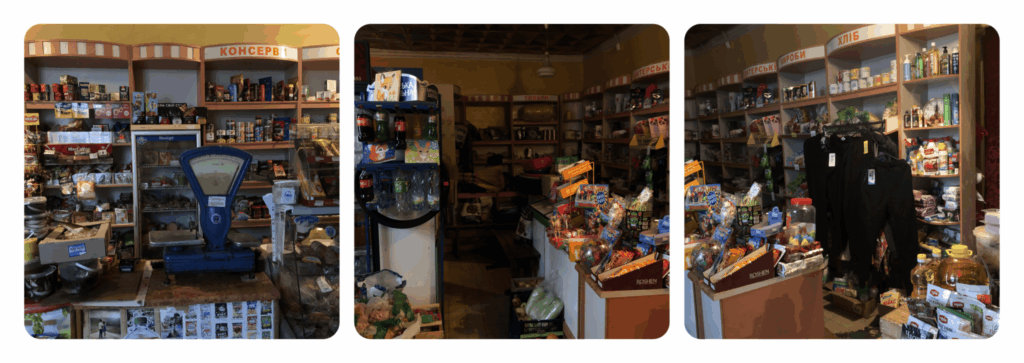
On February 24, they went to work as usual. Alla and Tetiana were tending to their households, Olena was preparing to open the shop. Explosions were still echoing far away, but the world was already changing. No one expected that «their» shop would soon become a meeting place with Russian military, and later — a symbol of looting and destruction. The women survived the occupation, hunger, and the abduction of loved ones, but managed to persevere. The shop has opened its doors again, and people — have begun to rebuild their lives.
The morning that changed everything: how the occupation of Chernysh began
On February 25, Russian military were already in the village. At first, they came into the shop for cigarettes and news. Young, confused. They hadn’t started looting yet. Ms. Olena describes them like this: «Yes, they were about 19, maybe 20 years old. They were very young. They asked: “What did they say on the news?”».
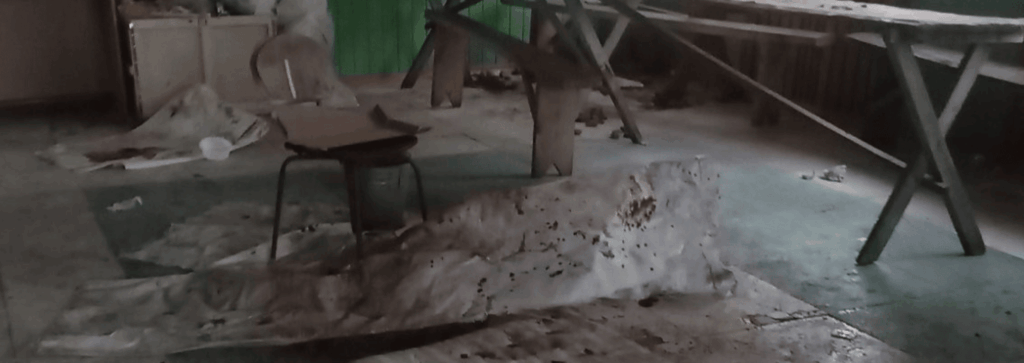
But this did not last long. Later, the shop was opened by force — they climbed in through a window. The shelves emptied quickly. Beer was poured directly onto the floor, and plates were smashed for amusement. Overall, the women recall that there were 6 rotations in the village. Each time, the situation became progressively worse.
When they had taken everything they wanted, they left the doors open. Locals began to come and take food products. Some — out of despair, some — out of greed. Olena only sighed: «This is on your conscience».
«Food was hidden underground and even in toys»: life under occupation
The first two weeks after the arrival of the occupiers, people tried their best not to go out into the street. If something rumbled or machinery was passing — they hid instantly. Only after the funeral of a woman who could not take it and took her own life did the invaders allow people to go out, but on the condition — they had to wear white armbands.
There was no bread from February 23 to April 1. It was baked manually — from ground grain, from potatoes. «We left a handful of dough for tomorrow so there would be another loaf», — recalls Ms. Tetiana. Everything had to be hidden — underground and even in toys. They were afraid the Russians would take it away.
«If you make it, you will live»: the abduction of men by Russians
Ms. Alla had to endure the abduction of her husband. The Russians especially disliked those who might have military experience or worked in fields related to technology. They stripped them, looked for marks from uniforms or backpacks, checked hands for calluses, scars, tattoos. Everyone who fell under suspicion was subjected to abuse.
Ms. Alla’s husband, a former «ATO participant», was turned in. After checking the documents and phones of the entire family, they took him in an unknown direction [пізніше було встановлено, що це був склад у районі села Петрушин]. Ms. Alla recalls how she walked around the village and tried to find him. But this only led to additional checks. And it was especially terrifying, as her daughter and daughter-in-law lived at home with her.
Meanwhile, her husband spent three days with his eyes wrapped in duct tape while he was interrogated. Then he and a cellmate were dumped 10 kilometers away from Chernysh with the words: «If you make it, you will live».
He made it. The husband still has problems with his eyes.
With cars, carpets and even toilets: how the Russians left the village
In the evening of March 30, chaos reigned in the village. Screams were heard, the movement of machinery did not stop. On March 31, the Russian military left Chernysh en masse. They took everything they could: cars, refrigerators, carpets, gates, even toilets.
Mrs. Alla’s husband worked with concrete rings at a farm. Russian military forces were based there. They took everything out—tools, machinery, even the farmers’ personal belongings. They confiscated cars from locals, and what they couldn’t steal, they destroyed. They left behind only destruction and junk.
“We got used to it. We live on”: The life of the village and the shop after de-occupation
At first, it was hard to believe it was all over. “But little by little. Everyone thought we wouldn’t plant our gardens, that there would be nothing. But no, with every day, every month, people came back to life,” Alla describes those days. The shop began to open up. Volunteers were the first to bring loaves of bread. Orders started coming in.
Olena went to the city for goods for the first time together with a farmer—he provided the car and the money. The road was difficult: the bridge hadn’t been rebuilt yet, so they had to cross on foot and look for detours. Only closer to April 10th did the situation stabilize a bit.
People were returning to the village, including those who had fled the war from their summer houses. The farmer helped, and locals supported one another: those who could bought [goods], and those who couldn’t received them for free.
“We got used to it,” Tetiana, Alla, and Olena say together. “We live on.” The three women are waiting for their loved ones to return from the army. Most of all, they wish for peace and for this never to happen again.
Material prepared by Oleksandra Lintovska and Diana Shcherbakova within the framework of the advanced school “Truth Through Stories,” implemented with the support of the Ministry of Foreign Affairs of the Netherlands and the National Endowment for Democracy (NED).