Almost two years after a severe injury, Bilopillia resident Bohdan Nekrasov convinces himself and others day after day that every step in this life must be fought for. His example should instill faith in those who feel that everything in life is lost, that the best moments of life are in the past.
We continue our newspaper stories about our courageous compatriots, both defenders and civilians, who, despite the challenges, find the strength not just to survive, but to return to a life that is as normal as possible. The editorial office collects these stories both as evidence of enemy crimes against civilians and as proof of the courage and resilience of Ukrainians.
During our meeting, Bohdan shared how he lives and where he finds strength after his leg amputation and long-term treatment.
Everything depends on the person’s own desire: to survive, to recover, to return to normal life, – Bohdan Nekrasov is convinced.
April 19, 2024, became a black day for Bilopillia. The enemy ruthlessly shelled the city, and shells hit residential quarters, taking the lives of civilians and destroying dozens of houses. Among the wounded was our compatriot Bohdan Nekrasov.
Bohdan is well-known in Bilopillia. For over 20 years, he owned a mobile phone store. In fact, he built the business himself, where his entire family worked, created new jobs, paid taxes, and participated in the city’s public life. He raised two sons, worked, and thought about providing for himself and his family for the future, developing the business, and dreaming of a secure and happy old age.
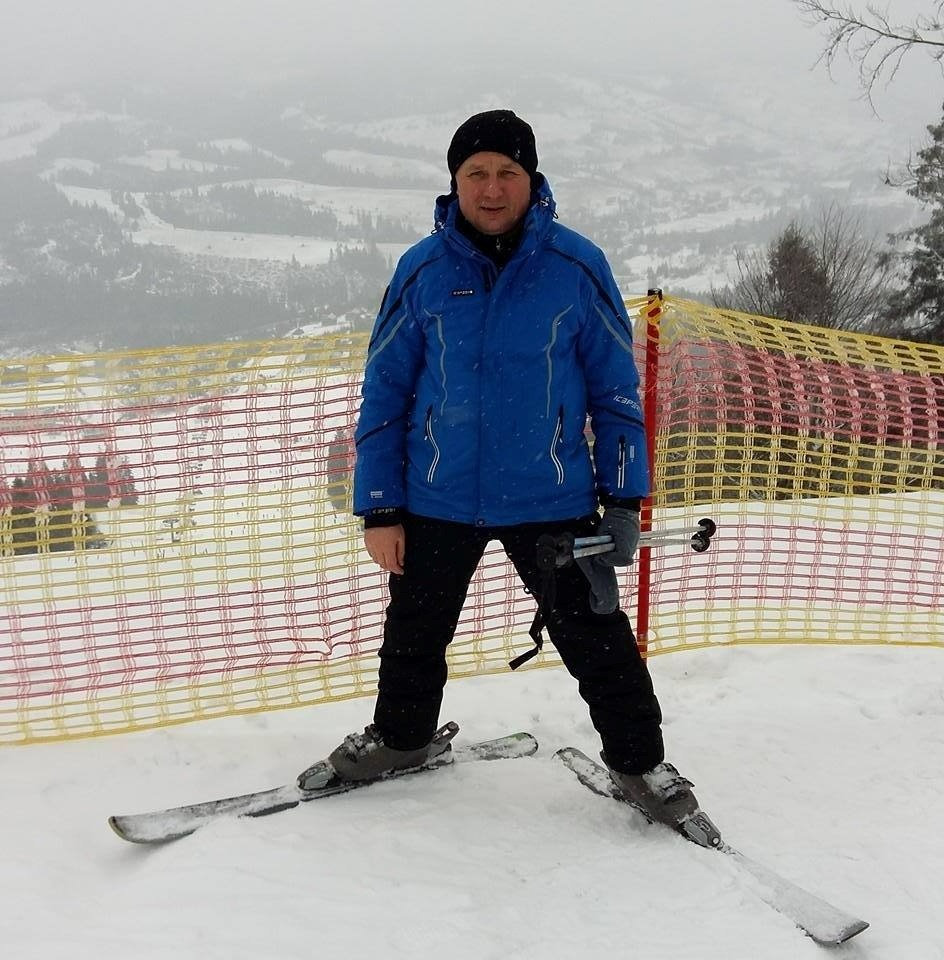 Bohdan Nekrasov (2016)Photo: From the personal Facebook page of B. Nekrasov
Despite the start of the war and hostilities in the Bilopillia region, he continued to work in the city, although his family insisted on leaving completely.
– My younger son Tymofii was very frightened by the explosions, and my wife and I took him to Sumy. But even there, explosions and shelling could be heard. Every time I came to Bilopillia, I saw the consequences of the next shelling and destruction and thought: well, it won’t get any worse. I consider that day, April 19, to be my second birthday.
I found myself under fire literally a minute after I left my own store. A shell exploded nearby. I was thrown back by the blast wave, and shrapnel instantly shattered my right leg. The left one was twisted and bloody. I ended up under the rubble, and when I regained consciousness, I saw blood flowing from me. Broken ribs punctured my lung — and I was suffocating. Confusion, pain, panic. But the most terrifying thing was the loneliness. I crawled along the ground, leaving a trail of blood behind. I knocked on the door of one of the stores — they didn’t open. Only a saleswoman from a nearby shop brought out a tourniquet. I applied it to my leg myself. This moment was the boundary between life and death.
Next, Bohdan was taken to the hospital in Bilopillia. Medics fought for him as best as they could. The entire staff rushed to help — IVs, tourniquets, they cut his clothes, fought the bleeding. A lung was punctured — they performed an emergency procedure to stop the internal bleeding.
– If they hadn’t stabilized me in the Bilopillia hospital, I wouldn’t have made it to Sumy, – Bohdan recalls. – My hemoglobin was 30. (The critical limit for life, according to doctors, is 50).
Then he was taken to the intensive care unit in Sumy, where he spent several days on the verge of life and death. And then rumors spread: ‘Bohdan is no more.’
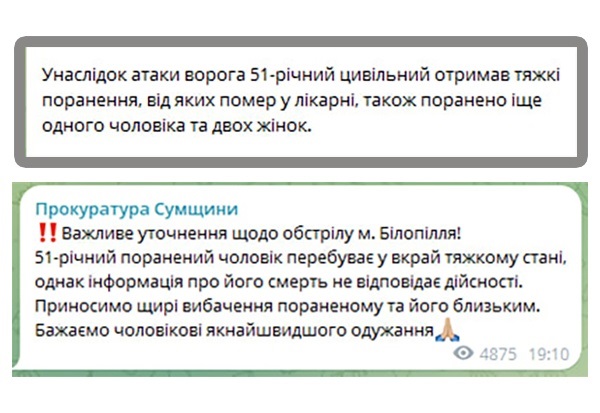
But he survived. He survived when the chances were minimal.
His right leg had to be amputated immediately — it had been virtually torn off. The left one was at risk. It had six fractures, shattered bones, damaged nerves, and no sensation in the toes. Doctors did not know for a long time if they would be able to save it. But Bohdan decided to fight. Surgeries, metal structures, the Ilizarov apparatus, pain, physiotherapy — he endured it all.
He recalls: “The hardest part is the night. The pain keeps you awake, thoughts weigh you down, and another surgery lies ahead. But I knew that giving up was not an option”.
More than a year in a wheelchair. Ten months with a device on his leg. But he didn’t stop. Beside him were family, friends, and strangers who helped financially. Without this support, he would not have made it. But the biggest turning point in his life was Superhumans — a hospital in the Lviv region where the most severely injured, both military and civilian, are treated. It was there that Bohdan saw a different reality: modern equipment, care, humanity. And — young men in their 20s, without limbs, but with fire in their eyes.
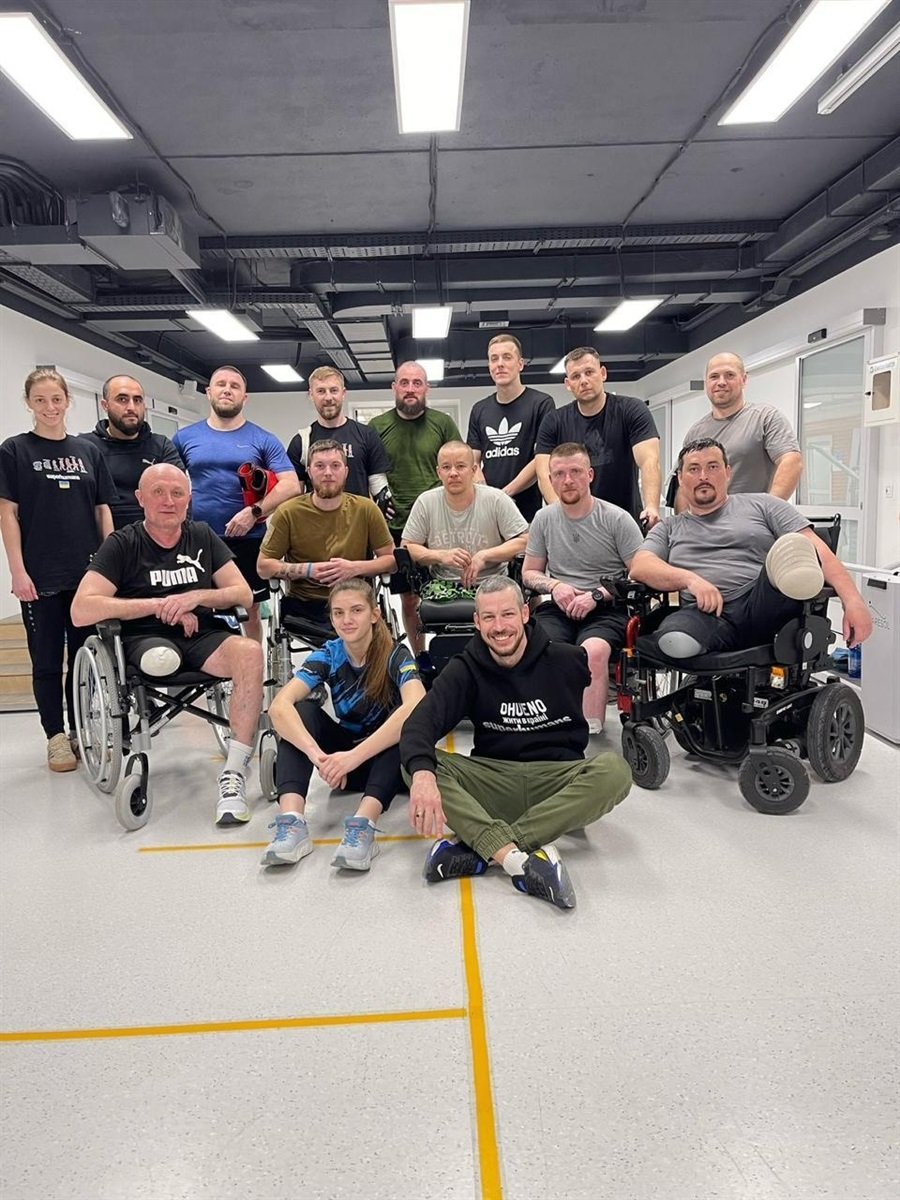
They inspired me more than anything. If they are fighting, then I have even more reason to…
At Superhumans, Bohdan received a high-quality prosthesis, rehabilitation, and new motivation. He even met Prince Harry, who came to visit the wounded.
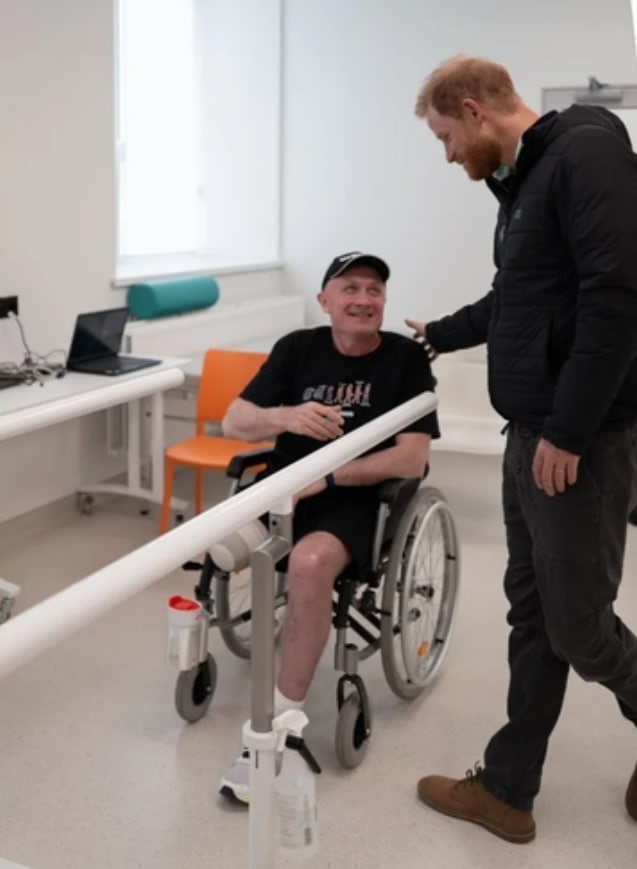
But what stuck with him most wasn’t that meeting, but the support of the men and women who were going through the same thing. Together, they learned to walk and learned to live again.
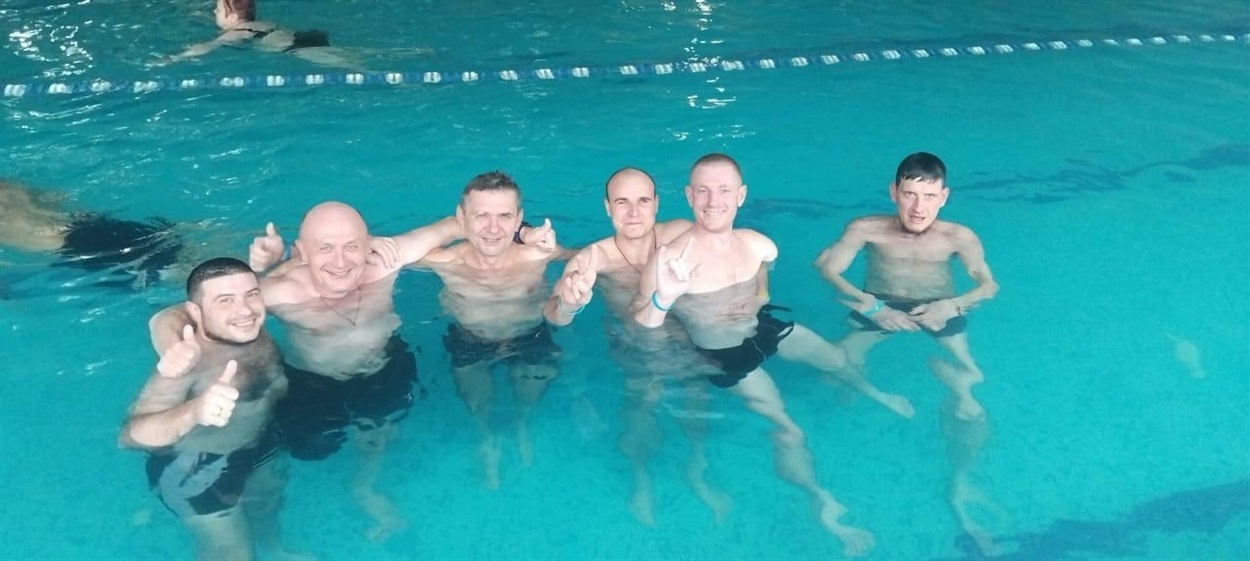
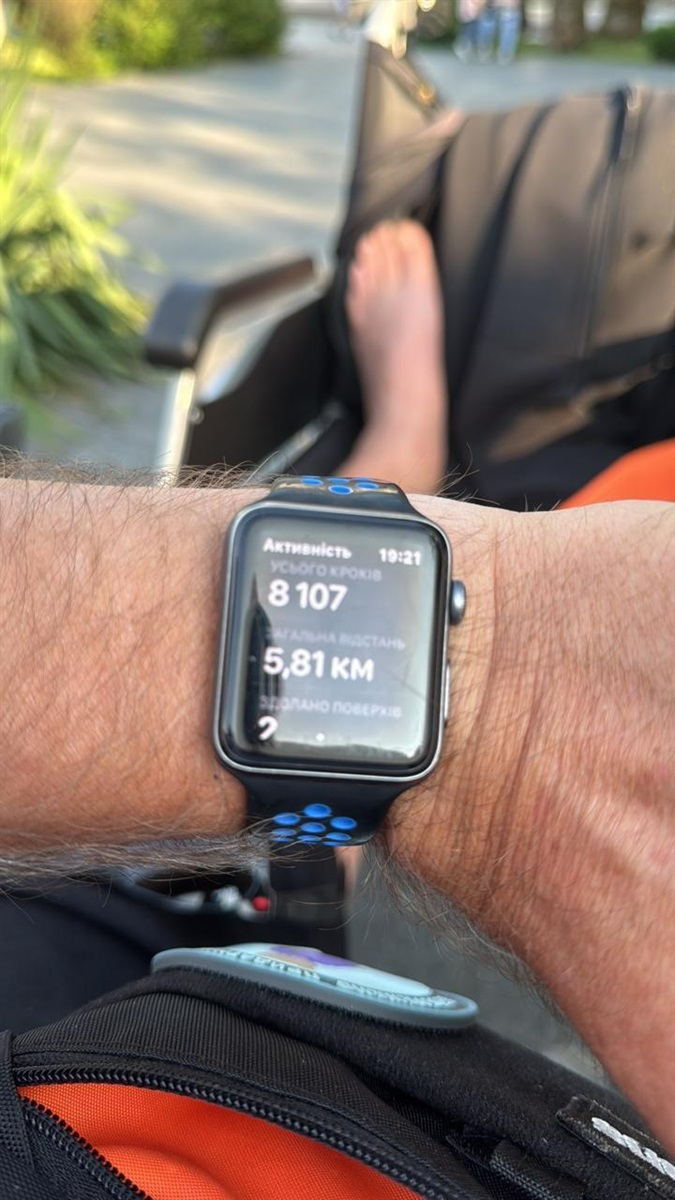
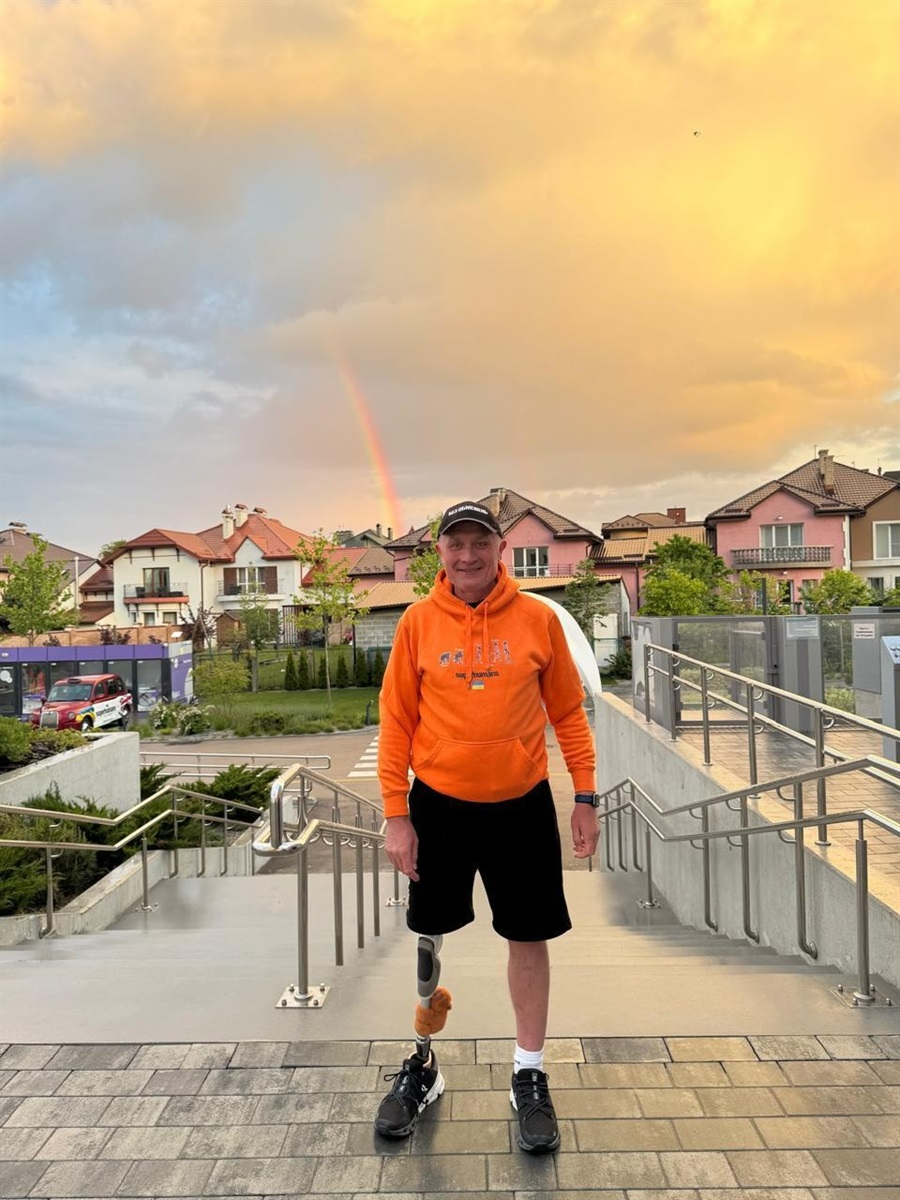
Today Bohdan lives in Sumy. He moves independently with a prosthesis — without a cane. He drives a car. And he even returned to his favorite hobby — fishing. He says that water is calming. Together with a fellow countryman, the head of the “Veteran Space” NGO and war veteran Mykola Zaretskyi, he trains with a sitting volleyball team. He also walks a lot. His daily goal is 5 km: “If I skip it, it gets harder. The body forgets the movement.”
But, unfortunately, the trials have not ended…
The struggle for documents turned out to be no less brutal than the struggle for life. Despite obvious injuries, disability status was not granted immediately. They even offered the third category. Eventually—the second. This was despite the absence of one leg and a ‘malfunctioning’ second one. He was denied compensation as a victim of Russian aggression. Pensions, IDs—everything was a battle.
‘This is a system. It is deaf to pain,’ — says Bohdan. But even in this, he does not give up. He continues to fight. Not only for himself, but also for those who are going through the same thing.
His story is not just about trauma. It is about courage, dignity, gratitude, and faith. It is about how even when it seems that life has ended—it is only just beginning. And as long as there are people like Bohdan Nekrasov, we have no right to give up.
I personally haven’t seen Bohdan since the summer, but we often talked on the phone and ‘saw’ each other on social media. We reminisced about many things and caught up on a lot.
At the end of our conversation, I asked Bohdan what had been most important for him during these difficult eighteen months of his new life in different conditions. Bohdan thought for a moment and said:
– The most important thing was that I re-evaluated my life, looked differently at the role of certain people in it, and learned to value what I have near me more. But most of all—I want to say words of gratitude and express my boundless love for my family.
You know, I wasn’t the only one wounded—all this time my family was practically right there with me. And they, along with me, experienced all that pain, those sufferings, and challenges. And when you are in a family and you are the head, people rely on you, they hope for you. You bear the primary responsibility for everything—for the financial status, for the well-being, for the peace of the family. And if you suddenly become physically helpless, everything changes.
It was precisely then that my closest ones — my wife, sons, mother, mother-in-law — were with me. They supported me, shared my pain and anxieties. Sometimes, I think, it was even harder for them than for me, because they saw it all from the side: both my suffering and my helplessness. They literally carried me in their arms, because for a long time I could not walk or move, and it was difficult both for me and for them. But not once, not for a moment, did I feel that it was hard for them or that they were tired. They never showed it. I am infinitely grateful to them. I have come to love them even more. I realized that my family is my strength, my backbone, my hope.
Today I look at life differently, I value every moment, I value the people who are nearby. Friends, acquaintances, even strangers helped me. But my attitude toward some people has changed — as they say, there is no turning back. The biggest lesson I’ve learned is to value life. To fight for it. And to cherish those who are with you, who stayed by your side when it was the hardest. To value loyal people. To love them. To hold on to them and support them.
This material was prepared by Natalia Kalinichenko based on the results of a field mission within the project ‘Strengthening Civil Society Resilience for Justice and Accountability’, implemented by the Educational Human Rights House — Chernihiv with the support of the National Endowment for Democracy (NED).
The original material is posted on Bilopillia.City